Billboard Now Counts Smart Media Albums: The Rights Side of a Physical Product That Unlocks Digital Music

By Tami LaTrell
The music industry is making room for a product that sits between a physical album, a digital experience, and a piece of fan culture.
Beginning with the October 2–8, 2026 tracking week, Billboard and Luminate will recognize qualifying Smart Media Albums as chart-eligible physical formats in the United States.
That matters for chart strategy. But the larger story is about rights.
A Smart Media Album is still a physical product. It can be a card, sticker, clothing tag, lanyard, mini cassette, mini CD, mini vinyl record, wristband, patch, keyring, trading card, or poster. A QR code, NFC chip, or ultrasonic signature unlocks album content and additional digital assets through a dedicated app or website.
One product. Multiple rights questions.
If you’re an artist, songwriter, producer, composer, publisher, or catalog owner, you need to understand what happens behind that fan-facing experience. The chart credit may be visible. The royalty infrastructure is not.
Talent creates the opportunity. Infrastructure protects the value.
Diagnosis: A Chart Story Is Really a Rights Story
The Smart Media Album announcement was brought forward by Symphony in a September 25, 2026 Instagram post. Billboard’s announcement and Luminate’s reporting confirm that the format is entering the U.S. chart system after already becoming eligible in markets including the United Kingdom, Australia, and Germany.
During the introductory phase:
- Each qualifying transaction counts as one full album sale on Billboard’s album sales charts.
- Each transaction counts as 0.5 equivalent album units on the Billboard 200 consumption chart.
- Releases are limited to two eligible Smart Media UPCs per album.
- Products must come from approved vendors: IYK, KiTbetter, Serenade, Totem, WeVerse, Yoto, or ZATAP.
The format may look like a modern collectible. Administratively, it is a release version with physical and digital characteristics.
That means your title, writer information, publishing data, splits, ISRCs, UPCs, label details, and ownership records must agree across every relevant system.
No clean metadata, no clean money trail.
And the two-UPC limit makes version control even more important. You cannot rely on unlimited variants to correct sloppy planning later. Every version decision carries more weight.
Royalty Education: The Physical Rebound Is Already Here
Smart Media Albums are not appearing in a vacuum. They are the next evolution of a physical music market that has already been growing.
As noted in our prior reporting, U.S. physical recorded-music revenue reached $731.5 million in the first half of 2026, up 25.9% from the same period in 2025. CD revenue rose to $171.1 million, up 58.6%, while vinyl reached approximately $544 million, up 17.7%.
Fans are buying physical music for different reasons now. They may want a collectible, a limited edition, a tangible connection to an artist, or access to an exclusive digital experience.
The format changed. The rights did not.
A Smart Media Album can still involve:
- The composition, owned by songwriters and publishers.
- The sound recording, owned by an artist, label, producer, or other master rights owner.
- Mechanical royalties connected to reproductions and digital uses.
- Performance royalties connected to public performances.
- Digital performance royalties for eligible non-interactive services.
- Metadata required to identify every contributor and rightsholder.
If you only watch the chart result, you may miss the money underneath it.
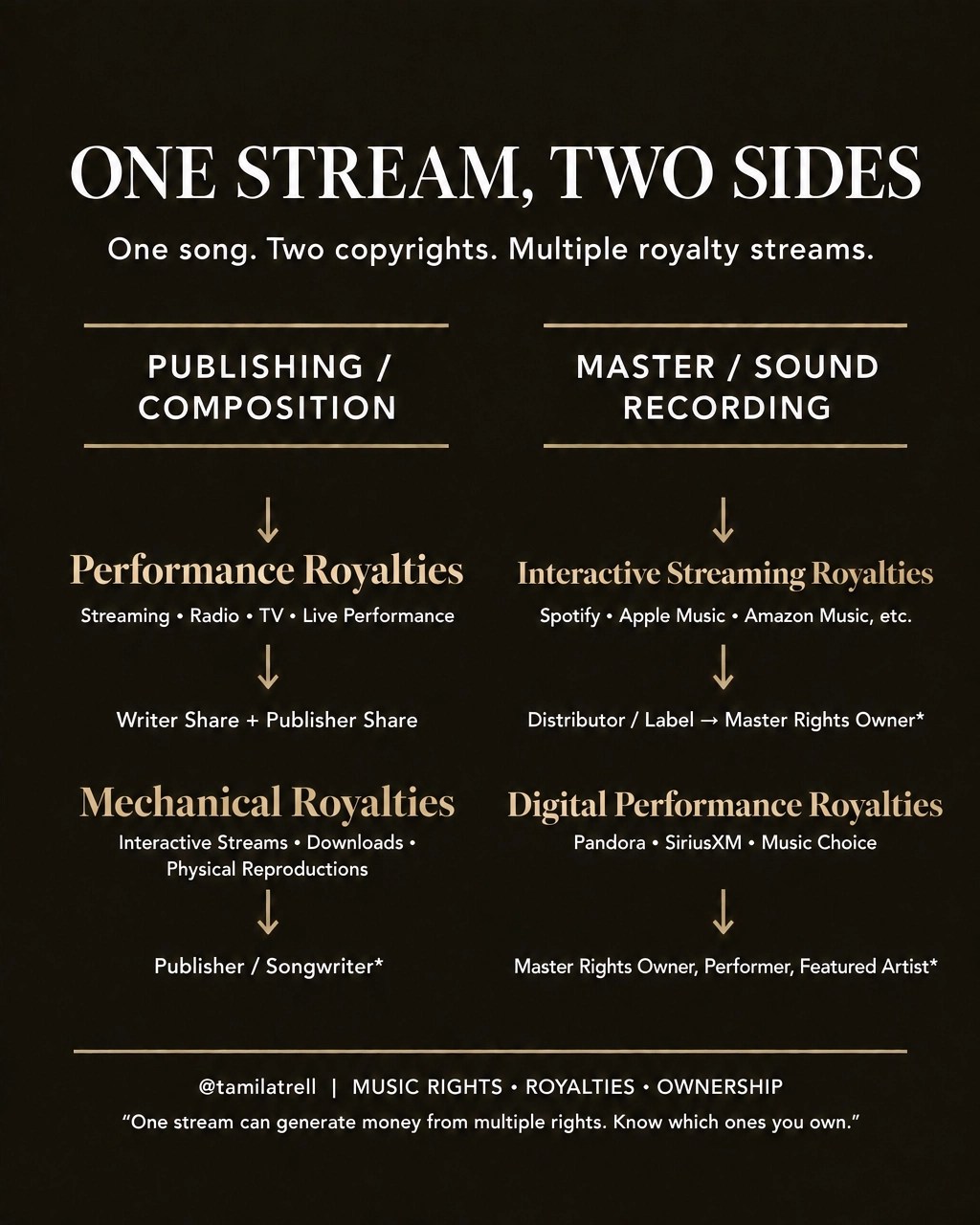
MLC & HFA Mechanical Royalties
This is the key rights distinction.
The MLC pays digital mechanical royalties for compositions streamed on digital service providers. HFA pays mechanical royalties for compositions sold in physical formats.
A Smart Media Album can touch both lanes because it is a physical good that also delivers digital content.
The physical product may create a mechanical royalty obligation connected to the sale or reproduction of the composition. The digital experience may create additional obligations depending on how the music is delivered, licensed, accessed, or streamed through the dedicated app or website.
That is why independent creators should not treat a Smart Media Album as “just merch” or “just another digital link.”
It can create a rights environment involving:
- Physical mechanical royalties associated with the product.
- Digital mechanical royalties associated with digital delivery or streaming.
- Master-side revenue tied to the sound recording and the terms governing the digital experience.
Creators can miss money in both lanes. The Mezzo Agency checks both.
The MLC’s distribution timing also matters. Refer to the start date as 2027. Until funds are matched, claimed, and distributed, reported usage does not automatically become money in your account.
The outstanding figures show why this matters:
- For January 2021, $6.30 million remained from $53.88 million reported: $3.24 million unmatched and $3.06 million unclaimed.
- Across the first 12 months of 2021, $75.13 million remained from $674.89 million reported: $37.13 million unmatched, $38.00 million unclaimed, and $1.63 million in dispute.
The lesson is straightforward.
Reported does not mean collected.
Catalog Infrastructure: Two UPCs Leave Little Room for Error
The two-UPC limit is not only a chart rule. It is a catalog infrastructure issue.
Every Smart Media Album version needs an intentional identity. That includes:
- Album and track titles.
- Featured artist names.
- Writers and publishers.
- Music royalty splits.
- ISRC assignments.
- UPC assignments.
- Release dates.
- Product and version descriptions.
- Distributor and label information.
- Ownership and licensing terms.
- Digital asset details.
Your album may have one standard digital release and two Smart Media versions. If those versions contain different recordings, bonus tracks, remixes, or additional content, the distinctions need to be documented clearly.
Do not let a new physical format create duplicate works, conflicting titles, or unexplained ownership changes in your catalog.
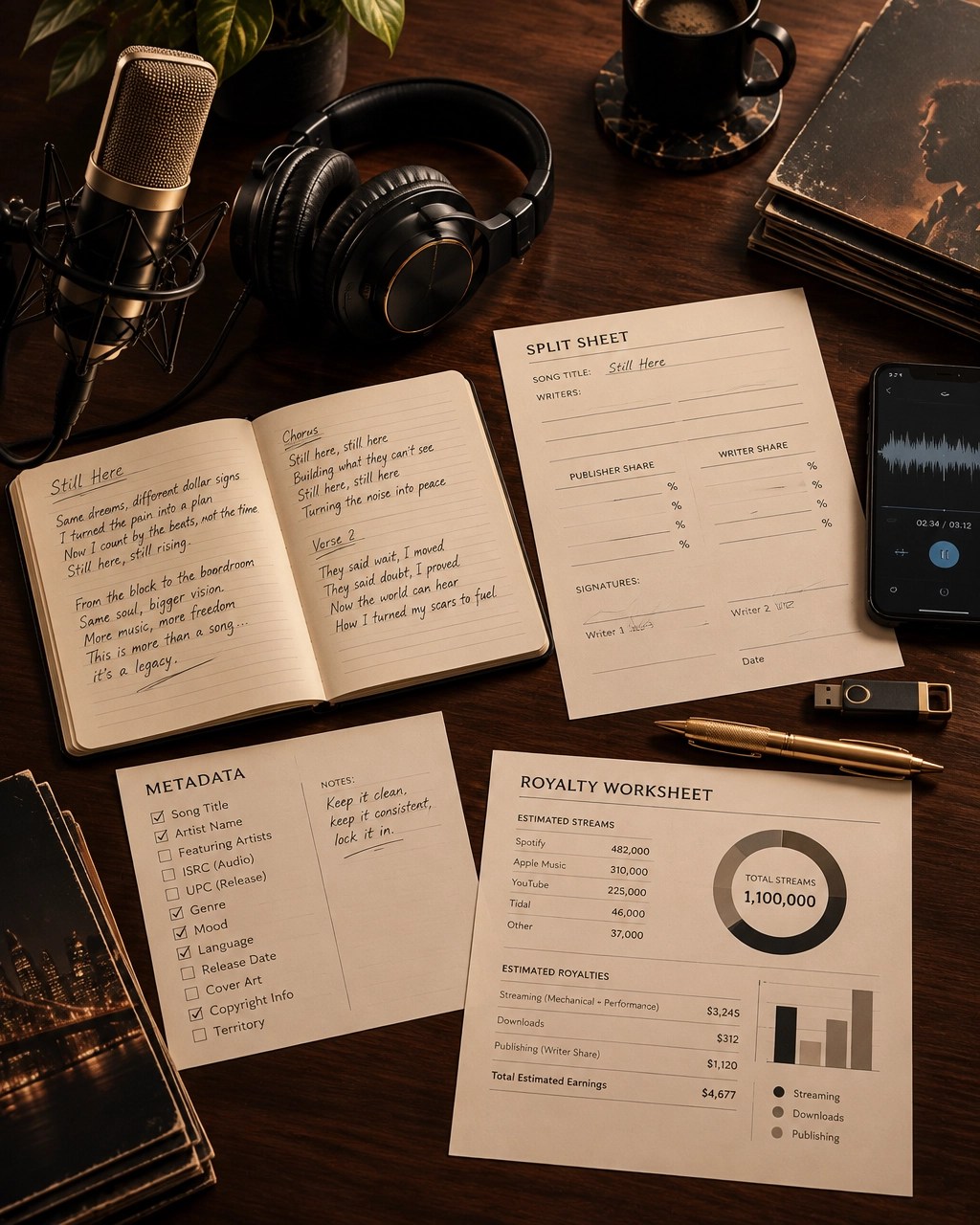
This is where music metadata management, music rights management, and music catalog management become financial safeguards rather than administrative chores.
A single incorrect writer name can affect songwriter royalties. A missing publisher can interrupt music publishing administration. A mismatched ISRC can make usage harder to connect to the correct master. A duplicate UPC can create confusion around sales reporting.
The product may be small.
The data structure behind it is not.
Watch Out: Smart Media Does Not Bring Back the Bundle Loophole
The 2020 Billboard bundling rules still apply.
Merchandise and ticket bundles do not count toward the charts unless the album is also separately available at a standalone price.
So, don’t assume that attaching a Smart Media Album to clothing, a ticket, or another product automatically creates chart eligibility. The product must meet the applicable format, vendor, sale, and reporting requirements.
Smart media is innovative. It is not a shortcut around chart rules.
The same caution applies to royalties. A product being chart-eligible does not guarantee that every songwriter, producer, publisher, or master owner has been correctly registered for payment.
Chart eligibility is not the same as royalty readiness.
What The Mezzo Agency Checks
The Mezzo Agency approaches Smart Media Albums as part of the larger rights and revenue picture.
We check the relationship between:
- The physical product and its UPC.
- The album and track-level metadata.
- The composition and sound recording.
- Writer, producer, publisher, and ownership information.
- Physical mechanical royalty pathways through HFA.
- Digital mechanical royalty pathways through The MLC.
- Performance and digital performance royalty registrations.
- Sales reporting and catalog records.
- Licensing terms for digital assets.
- Version history and long-term catalog value.
That includes the rights information supporting music royalty collection, music publishing administration, music catalog valuation, and the recovery of unclaimed music royalties or missing music royalties.
Your release should not only look complete to a fan. It should be legible to the systems responsible for identifying, matching, and paying the people who created it.

Solutions: Build the Infrastructure Before the Moment Arrives
Smart Media Albums give creators another way to connect with fans. They also give creators another place to lose track of ownership, metadata, licensing, and mechanical royalties.
Treat the format as a serious release asset.
Register the compositions. Confirm the splits. Protect the ISRC and UPC relationships. Document the physical and digital components. Keep the catalog current. Make sure your royalty infrastructure reflects how the music is actually being sold and accessed.
For emerging creators, this is a reminder to establish clean records before your catalog expands.
For established artists and music entrepreneurs, it is a reminder that new formats can expose old administrative gaps.
The industry is moving toward products that are physical in the hand and digital in the experience. Your rights administration must be ready for both.
One product can create more than one revenue lane.
One missing detail can interrupt more than one payment.
Read the original reporting from Billboard, Music Ally, and Luminate. Then save this breakdown, share it with your team, and continue reading the Mezzo Agency blog for practical education on music publishing, catalog infrastructure, and royalty collection.
#MusicPublishing


