Spotify Paid $11 Billion to Music in 2025: What Songwriters and Rights Holders Need in Place to Collect Their Share

By Tami LaTrell, music publishing executive and rights strategist
Spotify says it paid more than $11 billion to music rights holders in 2025, up more than 10% year over year. Roughly half of that came from independent artists and labels, and Spotify’s lifetime payouts to the industry are approaching $70 billion.
Those figures show the scale of streaming. They do not tell you how much any one artist, songwriter, producer, or publisher earned.
Industry-level payouts are not a creator’s payout. A stream becomes money in a rights holder’s account only when the right recording and composition are connected to accurate ownership details, identifiers, splits, and registrations in the relevant royalty systems. When those details do not connect, royalties can remain unmatched or unclaimed instead of reaching the people entitled to them.
That connection is the operating foundation of music royalty collection.
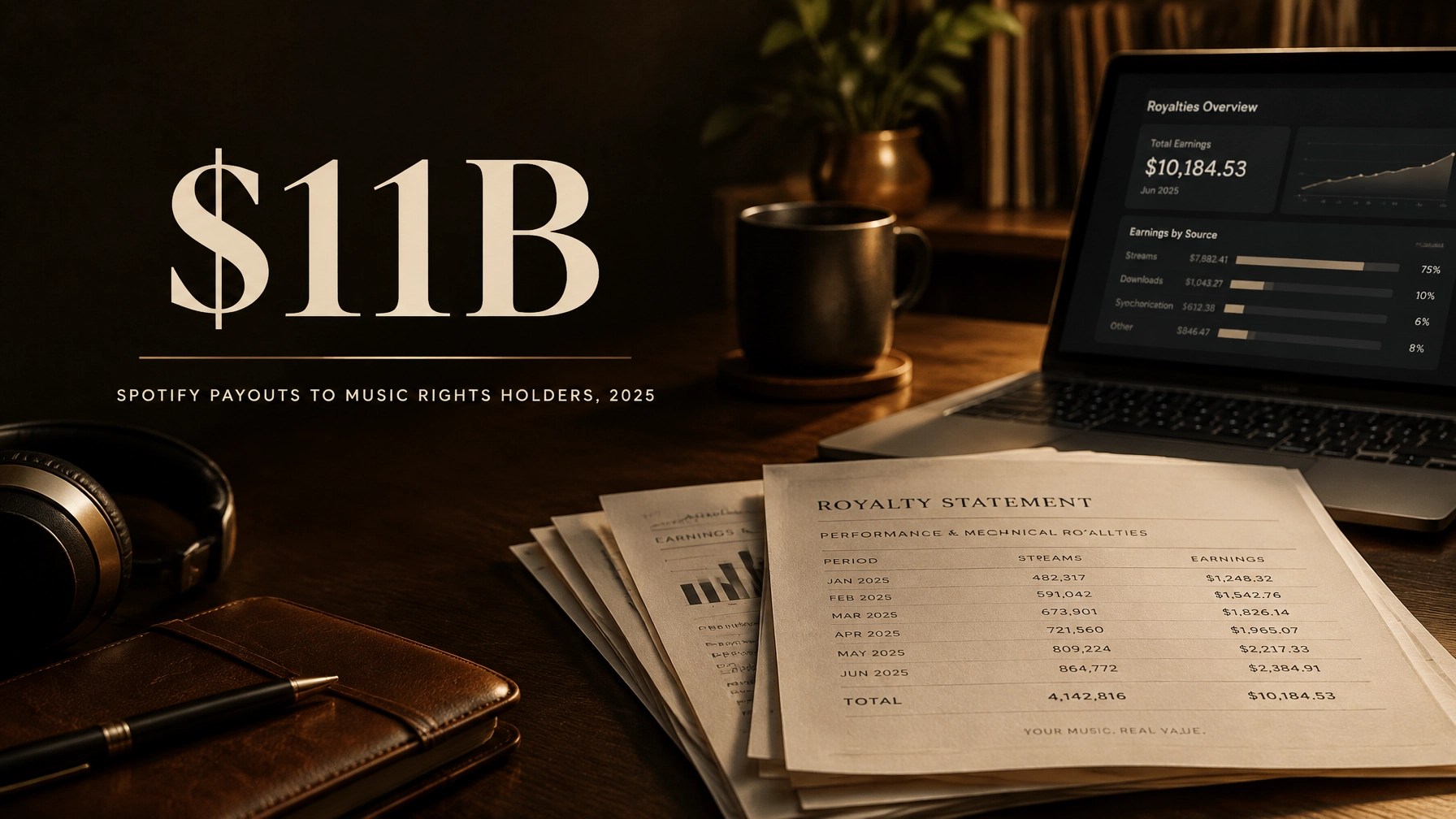
Diagnosis: Why a large industry payout may not reach you
Spotify’s Loud & Clear information describes payments to music rights holders across the industry. Rights holders can include labels, distributors, publishers, and other entities. Individual creators are generally paid through the companies or organizations that administer their rights, according to their agreements and ownership shares.
So the headline amount is not a direct payment to each artist or songwriter. Your personal income depends on your rights, your contracts, and whether the information associated with your music allows each payer to identify who should be paid.
One stream can involve more than one royalty path:
- Master-side revenue relates to the specific sound recording. The distributor or label receives the applicable recording revenue and accounts to the artist or other rights holders under their agreement.
- Composition-side mechanical royalties relate to the underlying song. For eligible U.S. digital uses, The MLC administers digital mechanical royalties under the blanket license.
- Composition-side performance royalties are collected through performing rights organizations, or PROs, according to their mandates, registrations, territories, and applicable agreements.
These are separate rights and payment channels. A distributor delivering a recording to Spotify does not, by itself, establish that the composition is correctly registered for every publishing royalty. Likewise, a PRO registration does not replace The MLC’s role in U.S. digital mechanical royalties.
The operational question is not only whether a song was streamed. It is whether each relevant system can connect that use to the correct work, recording, owners, and shares.
Royalty Education: What “unmatched” and “unclaimed” mean
The MLC’s public unclaimed accrued royalties dashboard shows why the distinction matters. These figures relate to U.S. blanket mechanical royalties reported to The MLC for usage across digital services. They are not a breakdown of Spotify’s entire global payout.
For January 2021 usage, the dashboard shows $6.30M remaining out of $53.88M reported:
- $3.24M unmatched
- $3.06M unclaimed
Across the first 12 months of 2021, it shows $75.13M remaining out of $674.89M reported:
- $37.13M unmatched
- $38.00M unclaimed
- $1.63M in dispute
Unmatched royalties are associated with recordings in digital service reports that have not been matched to a composition in The MLC’s database. In plain English, the usage is reported, but the system has not connected it to the right song.
Unclaimed royalties are different. The recording has been matched to a song, but less than 100 percent of the composition’s ownership shares have been claimed by an MLC member. The system has found the work, but some ownership interests remain unclaimed.
That difference points to two distinct catalog risks: incomplete connections between recordings and songs, and incomplete claims to ownership shares. In either case, money can sit outside the account of a creator who may be entitled to it.
The MLC says market-share distributions of remaining unmatched and unclaimed accrued royalties begin in 2027. That does not mean every creator will automatically receive a payment. The distribution is based on the MLC’s applicable data and rules. Accurate work registrations, claimed shares, and recording-to-song matches remain central to how royalties are attributed.
Catalog Infrastructure: The details that connect a stream to its owners
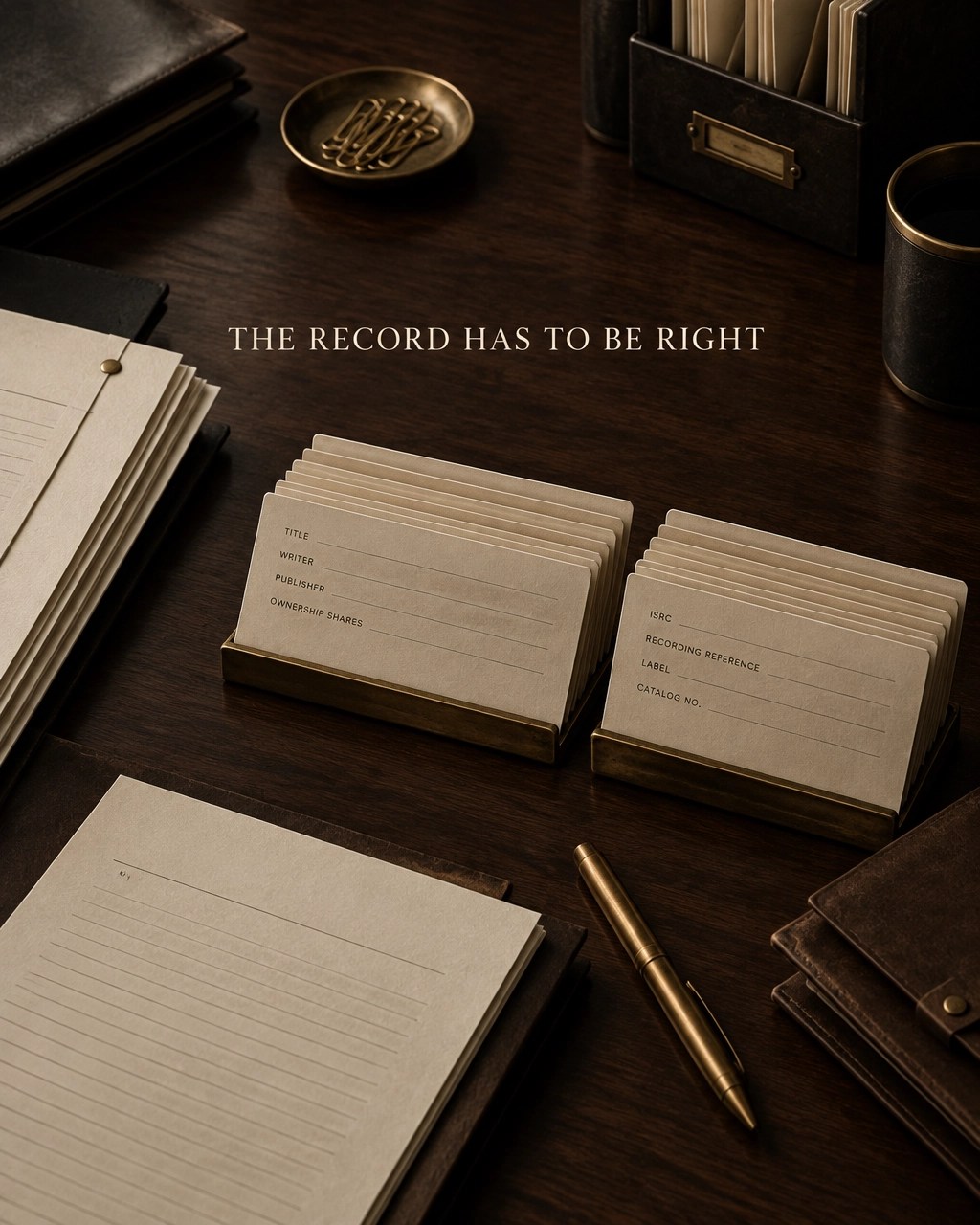
Royalty systems rely on information supplied by multiple parties. A song can have a different title variation across a distributor delivery, a publishing registration, a PRO database, and an agreement. Collaborators may be listed under different names. Splits may be missing or inconsistent. Recording identifiers may not be associated with the right composition.
Music metadata management is not just data entry. It is the information infrastructure that helps rights systems identify the recording, the composition, and the people entitled to payment.
For each work, the relevant picture may include:
- The correct song and recording titles
- Writers, publishers, artists, and other rights holders
- Agreed ownership percentages
- Identifiers associated with the recording and composition
- Registration and representation information in relevant systems
- Consistent data across releases, agreements, and royalty channels
No single field guarantees payment. But conflicting or missing details can make it harder for a payer or rights organization to identify the right work and ownership share.
MLC & HFA Mechanical Royalties
Mechanical royalties apply to the composition, but the collection lane can depend on how the music is used.
The MLC pays digital mechanical royalties for compositions streamed on DSPs in the United States under its blanket license. HFA, or Harry Fox Agency, pays mechanical royalties for compositions sold in physical formats. A creator can be covered in one lane and exposed in the other. The Mezzo Agency checks both.
That distinction matters beyond streaming. The RIAA’s 2025 mid-year report says physical music generated $576.4 million in U.S. wholesale revenue in the first half of 2025, with vinyl accounting for more than three quarters of that. Physical sales and digital streams involve different reporting and administration, so a creator’s publishing information needs to be considered across formats.
What The Mezzo Agency Checks
The Mezzo Agency provides music administration support for independent artists, songwriters, producers, composers, and music rights owners. Its catalog and publishing administration services are focused on making the rights and information around a body of work more organized and visible.
Depending on a creator’s catalog and needs, The Mezzo Agency’s services may include attention to:
- Catalog details, including titles, collaborators, ownership information, and identifiers
- Publishing information and work registrations
- PRO and digital mechanical royalty registrations
- The relationship between recordings and compositions
- Potentially unclaimed or missing music royalties
- Royalty activity across relevant collection channels
This is service support, not a substitute for the agreements that determine ownership or payment terms. The purpose is to help creators understand whether the administrative information surrounding their catalog supports music rights management and royalty collection.
Creators retain 100% ownership of their copyrights when working with The Mezzo Agency. Talent creates the opportunity. Infrastructure protects the value.

The takeaway for music creators and rights holders
Spotify’s more than $11 billion payout is an industry-level figure. Your own royalties depend on a more specific chain: the use must be reported, the right recording and composition must be identified, ownership shares must be documented, and the relevant registrations and payers must be connected.
A well-managed catalog supports that chain across master-side income, mechanical royalties, and performance royalties. It also makes it easier to see where information is consistent, and where it may not be.
For more practical guidance on publishing, registrations, catalog health, and royalties, explore the Mezzo Agency blog library. If you want support understanding your catalog’s administrative picture, contact The Mezzo Agency to book a free call or request a catalog review.
#MusicPublishing

You Might Also Like


