The MLC Is Paying Out Unclaimed Royalties in 2027—Is Your Catalog Ready to Collect?

By Tami LaTrell, Music Publishing Executive and Rights Strategist
Category: Diagnosis
If you own songs that generated U.S. digital mechanical royalties in 2021, 2027 matters.
The Mechanical Licensing Collective, known as The MLC, will begin the process of distributing remaining unclaimed accrued blanket royalties in 2027. The process starts with the remaining royalties from January 2021, the first month that digital service providers reported royalties under The MLC’s blanket license, and then continues month by month after that.
The MLC plans to distribute one month of remaining royalties at a time. The money will be allocated pro rata for each digital service provider and offering, using actual distribution data. Statutory interest will be included and reported on regular monthly royalty statements.
Here’s the hard truth:
If your songs aren’t registered, matched, and claimed, you may not receive everything your catalog earned.
The good news? You still have time to review your data, identify gaps, and strengthen your royalty infrastructure.
What Are Unclaimed and Unmatched Royalties?
Let’s make this simple.
When a song is streamed or downloaded through a service covered by The MLC’s blanket mechanical license, the use may generate a mechanical royalty for the composition. The MLC collects those royalties and distributes them to eligible songwriters, composers, lyricists, and music publishers.
But payment depends on a reliable data trail.
The MLC must be able to connect:
- The sound recording reported by the digital service provider
- The correct musical work
- The songwriters and publishers
- Each ownership share
- The correct payment information
When that connection is incomplete, money can sit in the system without reaching the right person.
What does “unmatched” mean?
Unmatched royalties are connected to a sound recording reported by a digital service provider, but The MLC has not matched that recording to a musical work in its database.
The system may have information about the recording, but it cannot confidently identify the composition or the right copyright owners.
What does “unclaimed” mean?
Unclaimed royalties relate to a sound recording that has been matched to a musical work, but not all ownership shares have been claimed by an MLC member.
For example, a song may be registered with three writers, but only two writers have claimed their shares. The remaining share may continue generating royalties without being paid to the correct owner.
That’s the difference:
- Unmatched: The recording has not been connected to the correct song.
- Unclaimed: The song has been identified, but some ownership shares remain unclaimed.
Both problems can affect your music royalty collection.
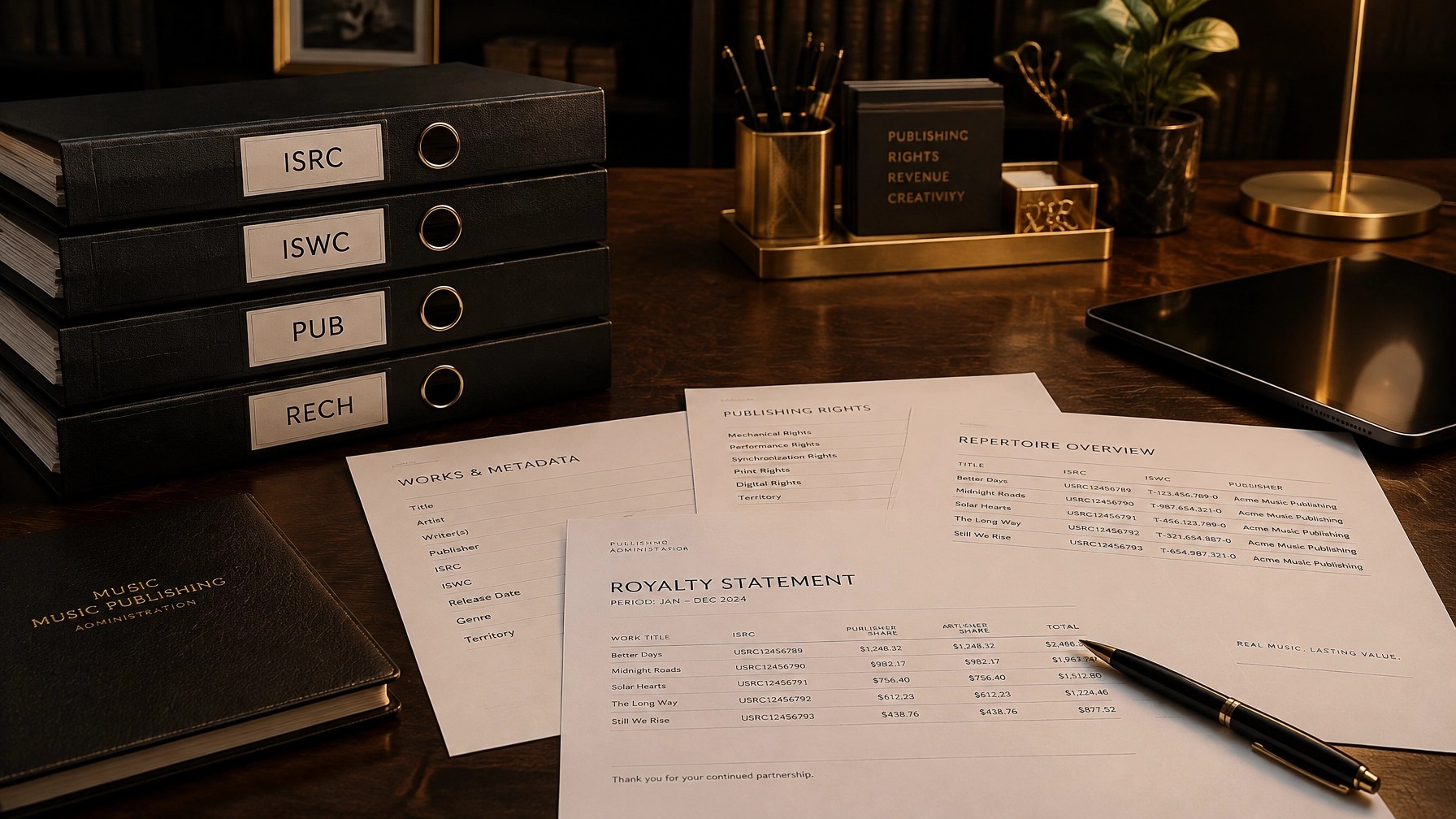
How The 2027 Process Works
The MLC has announced plans to begin market share distributions in 2027.
The process will begin with remaining unclaimed accrued blanket royalties from January 2021. After that, The MLC plans to distribute the remaining blanket royalties one month at a time in later monthly distributions.
The allocation will be based on actual data from each digital service provider and offering. Every song that earned monthly royalties: whether those royalties were identified initially or through later reprocessing: will receive its pro rata share of the remaining royalties for that month.
The distributions will also include interest calculated at the statutory rate.
You can review The MLC’s explanation on its Market Share Distributions page and monitor the Unclaimed Accrued Royalties Dashboard.
What the current dashboard shows
The dashboard now gives a clearer picture of what is still sitting in the system.
Across the first 12 months of 2021 (January through December), approximately $75.13M in royalties still has not been connected to its owners, out of $674.89M in reported royalty pools.
That is the headline.
Roughly one out of every nine dollars of 2021 royalties still was not paid directly to the right owner through the normal process.
If you want the percentage view, it works out to about 11%. But the dollar figure is what should get your attention.
Here is the split in plain English:
- $37.13M unmatched: The system could not identify the song
- $38.00M unclaimed: The song was identified, but ownership shares were never claimed
- $1.63M is in dispute
Now bring that down to one month.
For the January 2021 usage period alone:
- $53.88M in royalty pools were reported
- $47.47M has already been distributed
- $6.30M could not be connected to its owners
- That $6.30M includes $3.24M unmatched and $3.06M unclaimed
And January is not some one-off outlier.
Each month of 2021 shows a similar remaining total, with unclaimed accrued royalties sitting between roughly $5.8M and $6.9M per month.
Here’s why that matters.
This is only the first 12 months of 2021, and it is the oldest, most heavily matched period in the pipeline. Later periods are still being processed.
That does not mean the money disappeared. It means the data trail is still broken somewhere.
For you, that can mean your song exists, your streams happened, and the money was reported, but your catalog still is not organized well enough for the system to confidently pay the right share to the right party.
No clean match, no clean payout.
Why should you act before the distribution?
Once a month’s remaining unclaimed accrued royalties are included in a market share distribution, those specific leftover amounts will no longer be sitting in the system waiting for a direct claim.
You may still participate in the market share distribution if your catalog had qualifying matched earnings for that period. But that is not the same as directly recovering every unmatched or unclaimed use connected to your work.
Registration today is more valuable than explanation later.
Why This Can Affect Your Money
You may have registered your song somewhere. That doesn’t automatically mean your catalog is complete everywhere.
A song can have a registration gap because:
- The title is slightly different across systems
- A writer’s legal name is missing
- A publisher is listed incorrectly
- Ownership shares do not total 100%
- A co-writer registered the work without your share
- The sound recording was not connected to the composition
- Your metadata does not match the information reported by a digital service provider
- Your Member Hub account is missing a claim
This is why music catalog management matters. Your catalog is not just a folder of audio files. It is a working rights database that should document your songs, collaborators, ownership, codes, registrations, and royalty pathways.
No clean data, no clean payment trail.
And when the payment trail breaks, your loss can become someone else’s payout.
Your 15-Minute MLC Checkup
Before 2027, the issue is not whether a creator can click through a checklist. The issue is whether the catalog can withstand professional review against The MLC’s systems.
When The Mezzo Agency examines a catalog against The MLC’s tools, these are the five areas we review and why each one matters.
1. Public Work Search
We review The MLC Public Work Search for song titles, writer names, and publisher information.
This helps us identify whether the work exists in The MLC’s database at all, whether alternate titles are creating confusion, and whether spelling differences or registrations submitted by co-writers or publishers are affecting visibility.
If the work cannot be clearly found, that is often the first sign that the data trail is weaker than the owner thinks.
2. Missing Member Lookup
We review the Missing Member Lookup for songwriters, publishers, or rights owners connected to the work who may not yet be registered with The MLC.
This matters because a catalog can appear partially built while key ownership parties are still not represented in a way The MLC can pay. Incomplete owner representation can leave shares sitting in the system even when the song itself is known.
3. Member Hub claims
We review whether a work includes your ownership share but that share is still sitting unclaimed inside Member Hub.
This matters because a matched song is not the same as a fully claimed song. A catalog may be visible in The MLC and still have money stalled because the correct owner has not completed the claim path for a specific share.
4. Matching Tool
We review the Matching Tool for sound recordings that may belong to the catalog but are not connected to the correct compositions.
This matters because usage can be reported at the recording level while the composition connection is still broken. If the recording and the song are not tied together properly, the royalty trail can stop before payment reaches the right party.
5. Songwriter and Member Hub information
We review Songwriter Hub and Member Hub information for name, identifiers, contact information, and ownership details that may prevent payment.
This matters because even when matching is resolved, inaccurate or incomplete member information can still interfere with payment. If The MLC cannot confidently identify the owner and route the money, the infrastructure is still incomplete.
These are the kinds of gaps The Mezzo Agency reviews before money is pushed into a distribution pool instead of reaching the right owner directly.
Talent creates the opportunity. Infrastructure protects the value.
Common Gaps That Create Missing Music Royalties
Missing ISWCs
The International Standard Musical Work Code, or ISWC, helps identify a composition. If your work is missing an ISWC or has conflicting identifiers across organizations, matching can become harder.
An ISWC is not a substitute for registering your work, but it is an important part of music metadata management.
Incorrect music royalty splits
Your split sheet should clearly show who owns what percentage of the composition.
If your split information is incomplete, inconsistent, or different from what has been registered with a PRO or mechanical licensing agency, payment may be delayed or held.
Your split is not a suggestion. It is payment instruction.
Songwriter and publisher mismatches
A songwriter may be registered under one name while the publisher appears under another. A self-administered writer may have formed a publishing entity but never updated the relevant organizations.
That kind of disconnect is exactly what The Mezzo Agency checks, because one mismatch across systems can keep songwriter and publishing royalties from reaching the right owner.
MLC & HFA Mechanical Royalties
HFA, or Harry Fox Agency, has administered mechanical royalties since 1927 and is now part of SESAC Music Group. It handles mechanical licensing for physical formats such as vinyl and CDs, while The MLC handles U.S. blanket digital mechanical royalties for compositions streaming on DSPs.
That split matters more right now because physical is not some tiny leftover lane. According to the RIAA’s 2026 mid-year report, U.S. physical music revenue reached $731.5M in the first half of 2026, with vinyl at $544M, CDs at $171.1M, and total U.S. recorded music revenue at $6B.
Plain English: The MLC pays digital mechanicals for compositions streaming on DSPs. HFA pays mechanicals for compositions sold as physical copies. Two payers, two lanes, one composition.
Here is where creators miss money. They register with The MLC and assume the mechanical lane is fully handled. They release vinyl or CDs without securing a mechanical license, so those units are never reported. Metadata and split gaps can also keep HFA money from reaching the right owners, and small physical runs often never get reconciled later.
At The Mezzo Agency, we check both lanes.
You may still need to review your PRO registration, publishing administration, copyright registration, and other royalty sources separately.
That includes performance royalties, digital performance royalties, SoundExchange royalties, and other music publishing royalties.
One system being correct does not prove that every system is correct.
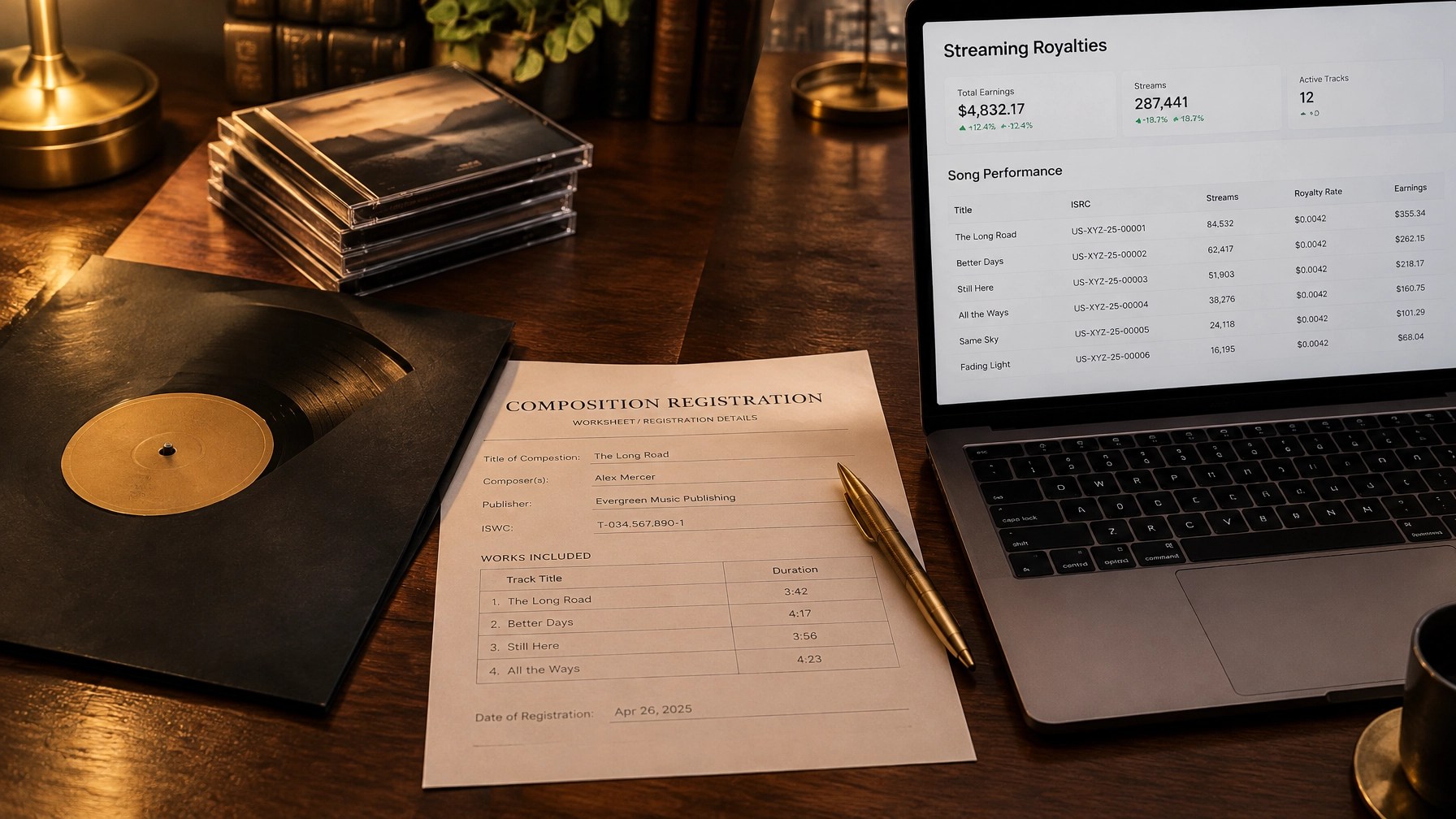
A Catalog Health Audit examines whether your music catalog is complete, accurate, and properly connected to the organizations that may owe you money. Here’s what The Mezzo Agency checks:
- Song titles and alternate titles
- Writer and publisher names
- Ownership shares and music royalty splits
- PRO registrations
- Mechanical licensing registrations
- Sound recording and composition connections
- ISRC and ISWC information
- Missing or conflicting metadata
- Unclaimed or potentially missing music royalties
At The Mezzo Agency, we provide Catalog Audit support for creators who need a clearer view of their royalty infrastructure. We also support catalog management, music publishing administration, registration, and royalty collection.
The goal is not to take control away from you.
The goal is to make sure the right issues are identified before they continue disrupting payment.
You retain ownership of your copyrights. The Mezzo Agency handles this work without taking control away from you.
Talent creates the opportunity. Infrastructure protects the value.
Don’t Wait for the Statement
Your royalty statement is the result of your infrastructure. It is not the infrastructure itself.
By the time a payment is missing, delayed, or redirected into an unclaimed pool, the original mistake may be months or years old. That’s why you should review your catalog before the 2027 market share distributions process begins.
Unchecked catalog gaps can keep money from reaching the right owner, even when the usage was reported.
Protect the songs. Protect the data. Protect the money.
If you’re unsure where to begin, book a free call with The Mezzo Agency. We’ll help you understand what may be affecting your catalog and whether a Catalog Health Audit is the right next step for your catalog.
Your music earned the opportunity to be paid.
Make sure your infrastructure gives it a way to get there.
Official Resources

You Might Also Like


